If your business generates blood-stained materials, used sharps, laboratory cultures or any waste that has come into contact with body fluids, you are handling biohazard waste. And in Australia, disposing of it is not something you can leave to the regular rubbish collection. It carries real risks to your team, the public and the environment, and getting it wrong can bring serious legal and financial consequences.
The good news is that biohazard waste management follows a clear set of national standards. Once you understand the fundamentals, staying compliant becomes far more straightforward. Here is what every Australian business needs to know.
What is biohazard waste?
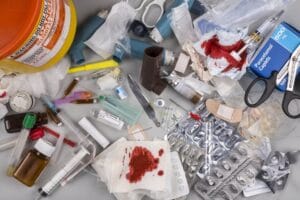
Biohazard waste, also known as clinical or medical waste, is any waste containing infectious or potentially infectious material. That includes blood, body fluids, human tissue, laboratory cultures, used sharps and other contaminated items.
A useful test is this: if the item has come into contact with blood, body fluids or infectious material, treat it as biohazard waste. Everyday items like hair, teeth, nails or general office rubbish from a healthcare setting do not qualify, even though they come from the same premises.
It is not only hospitals that produce it either. Dental practices, GP clinics, vet clinics, aged care homes, laboratories, tattoo studios, beauty clinics and many other businesses generate biohazard waste as a routine part of their work.
The rules that apply in Australia
Biohazard waste in Australia is governed by a combination of federal and state or territory regulations, along with a key national standard: AS/NZS 3816, Management of Clinical and Related Wastes.
Alongside that standard, businesses need to be aware of state-based Environmental Protection Authority (EPA) guidelines, workplace health and safety obligations, and the Australian Dangerous Goods Code, which sets the requirements for transporting infectious materials safely. Because the finer details vary between states, it pays to work with a provider that understands the framework in your jurisdiction.
Segregation: getting it right at the source
Compliance starts the moment waste is created. Proper segregation keeps infectious material out of the general waste stream and out of landfill, where it poses a contamination risk.
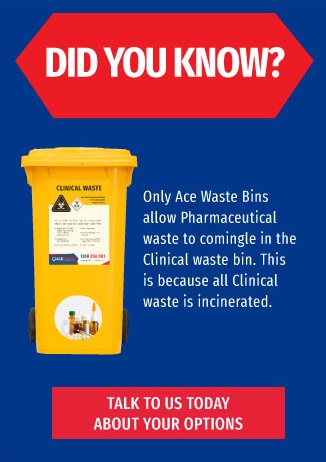
Australia uses a colour-coded system to make this straightforward. Clinical waste goes into yellow, Australian Standard containers, clearly marked with the biohazard symbol and lined with clinical waste bags. Cytotoxic waste, which is more hazardous again, is segregated into purple-coded containers marked with the cell in telophase symbol. Sharps must always go into rigid, puncture-resistant sharps containers that meet the relevant Australian Standard.
Mixing biohazard waste with general rubbish is not permitted under AS/NZS 3816. Beyond the safety risk, it can lead to penalties during an EPA audit. If you are unsure which container each item belongs in, our guide to clinical waste bin colours and types breaks it down bin by bin.
Safe storage and packaging
Once segregated, biohazard waste needs to be stored securely while it awaits collection. Containers must be leak-proof and puncture-resistant, clearly labelled, and kept in a designated area away from public access and general foot traffic.
Sealed containers should not require further individual handling once closed, which protects staff from needle-stick injuries and exposure to infectious material. Keeping storage areas orderly and containers well within their fill lines is a simple habit that prevents most incidents before they happen.
Compliant collection and disposal
This is the stage where partnering with a licensed specialist matters most. Biohazard waste cannot be disposed of like ordinary rubbish. It must be transported by an EPA-licensed provider and destroyed at an approved facility, typically through high-temperature incineration that completely destroys infectious material.
For most businesses, trying to manage transport and disposal in-house simply is not practical or compliant. A specialist provider handles the collection schedule, the correct documentation and the safe destruction of your waste, so you can focus on running your operation with confidence.
How Ace Waste supports Australian businesses
Ace Waste has been managing biohazard and clinical waste since 1987, and operates high-temperature incineration facilities in Brisbane and Melbourne, including one of Australia’s largest waste incinerators.
Our clinical waste disposal service covers the full journey, from supplying the correct colour-coded bins and sharps containers through to compliant collection and complete thermal destruction, all in line with Australian standards and EPA requirements. We work directly with hospitals, dental practices, GPs, vet clinics, aged care homes, laboratories and hospitality venues, so we understand the day-to-day realities of segregation in a busy setting.
We also help businesses get the foundations right. Through a waste management audit, our team can review how your waste is currently handled, identify any compliance gaps and recommend the right containers and collection frequency for your needs. Rather than the complexity landing on your desk, it becomes something managed properly on your behalf.
Take the guesswork out of biohazard waste
Biohazard waste management does not have to be complicated. With proper segregation, secure storage and an EPA-licensed disposal partner, you can meet your obligations, protect your people and keep your workplace safe.
Not sure whether your waste is compliant, or how to set up a collection schedule that suits your business? Get a quote from Ace Waste today and let our experienced team take care of it.
Frequently Asked Questions
1) What is classified as biohazard waste?
Biohazard waste is any waste containing infectious or potentially infectious material, including blood, body fluids, human tissue, laboratory cultures, used sharps and other contaminated items. A simple test: if the item has been in contact with blood, body fluids or infectious material, treat it as biohazard waste. General office rubbish and items like hair, teeth or nails do not qualify.
2) Can biohazard waste be thrown out with general rubbish?
No. Under AS/NZS 3816, biohazard waste must be kept separate from general rubbish at all times. Mixing the two creates a contamination risk and can lead to penalties during an EPA audit. Biohazard waste must be segregated into the correct colour-coded containers and disposed of through an EPA-licensed provider.
3) What do the different biohazard bin colours mean?
Australia uses a colour-coded system to make segregation clear. Clinical waste goes into yellow Australian Standard containers marked with the biohazard symbol, cytotoxic waste goes into purple containers marked with the cell in telophase symbol, and sharps go into rigid, puncture-resistant sharps containers. Using the right bin for each waste type is a key part of staying compliant.
4) Which businesses produce biohazard waste?
Far more than just hospitals. Dental practices, GP clinics, vet clinics, aged care homes, laboratories, tattoo studios, beauty clinics and hospitality venues all generate biohazard waste as part of their routine operations. If your business handles anything contaminated with blood, body fluids or infectious material, you have biohazard waste obligations.
5) How is biohazard waste disposed of in Australia?
Biohazard waste must be transported by an EPA-licensed provider and destroyed at an approved facility, usually through high-temperature incineration that completely destroys infectious material. It cannot be sent to landfill or handled like ordinary waste. Partnering with a licensed specialist ensures collection, documentation and destruction all meet Australian standards.