If your facility handles chemotherapy drugs or treats oncology patients, the question of what is cytotoxic waste comes up the moment a regulator walks through the door. Get the classification right and your compliance story almost writes itself. Get it wrong and you are looking at fines, exposed staff, and a paper trail that will not stand up in an audit.
After nearly four decades destroying clinical and cytotoxic waste for Australian hospitals, oncology units, and aged care providers, we have seen which compliance gaps cost facilities the most. This guide walks Australian healthcare providers through what cytotoxic waste actually is, where it shows up in day-to-day clinical work, and what proper cytotoxic waste disposal looks like under current standards.
What Is Cytotoxic Waste?
Cytotoxic waste is any material contaminated by cytotoxic drugs, the powerful compounds used primarily in chemotherapy and some autoimmune treatments. These drugs are designed to destroy cells and stop cell growth, which makes them effective against cancer but equally harmful to healthy tissue when staff are exposed.
The waste category covers anything that touches these drugs during preparation, administration, or aftercare. From our years working with oncology units and aged care providers, the most overlooked source is patient excreta, which remains hazardous for several days after treatment and routinely catches cleaning teams off guard.
Common examples of cytotoxic waste include:
- Gloves, gowns, masks, and other PPE used during drug preparation
- Swabs, dressings, and absorbent pads
- Sharps such as needles and syringes used to administer chemotherapy
- Contaminated IV bags and tubing
- Air filters from preparation cabinets
- Urine, faeces, and vomit from patients receiving treatment
If it comes into contact with a cytotoxic agent, it is cytotoxic waste, even if the contact looks minor.

Why Cytotoxic Waste Demands a Separate Stream
The reason this waste type sits in its own category is straightforward. Cytotoxic drugs are carcinogenic, mutagenic, and teratogenic, meaning they can cause cancer, genetic damage, and harm to developing foetuses. Skin contact, inhaled aerosols, and accidental sharps injuries are the three main exposure routes for healthcare staff.
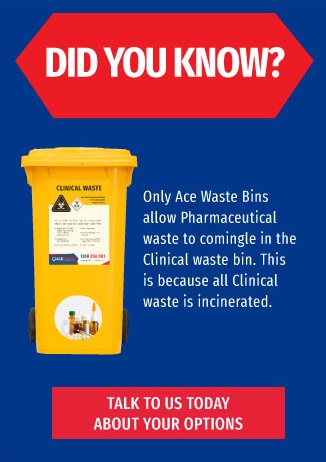
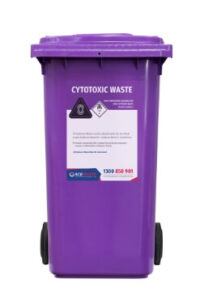
Mixing cytotoxic waste with general clinical waste contaminates the entire stream and pushes everything into the higher hazard category, which is exactly the mistake we see most often when a facility is first onboarded. That is why every Australian state requires purple, puncture-resistant, leak-proof containers with clear cytotoxic warning labels for this material. Purple is the national colour code, the same way yellow signals clinical and sharps waste.
How Cytotoxic Waste Disposal Works in Australia
Under environmental protection legislation across Australia, cytotoxic waste must be destroyed by high-temperature incineration. This is currently the only legal treatment method, because lower-temperature processes cannot guarantee complete destruction of the toxic compounds.
A compliant cytotoxic waste disposal workflow looks like this:
- Segregate at the point of care – Purple bins placed inside chemotherapy suites, theatres, and preparation labs so staff never have to walk contaminated material through other areas.
- Use approved containers – Sturdy, leak-proof, puncture-resistant, and clearly labelled with the cytotoxic warning symbol.
- Store in a secure, signed area – Access restricted to authorised personnel, with Safety Data Sheets available for each cytotoxic drug on site.
- Engage a licensed contractor – Only providers holding the relevant environmental authority can transport and treat this waste.
- Treat by high-temperature incineration – At a facility approved by the EPA in your state.
To see how this is handled end to end, Ace Waste runs a dedicated cytotoxic waste disposal service with EPA-approved incineration and real-time tracking through the Ace Waste Live system, so you always know where your waste is and how it was destroyed.
What Healthcare Providers Often Get Wrong
Three issues come up repeatedly in the audits we have supported across QLD and Victorian facilities. The first is colour-coding mistakes, with cytotoxic items dropped into yellow clinical bins because the staff member was rushed. The second is undertraining of cleaners and ward staff, who handle contaminated linen and excreta without realising the multi-day exposure window applies. The third is poor spill readiness, with cytotoxic spill kits either missing, expired, or stored too far from the point of risk.
Each of these is a documentation and training issue, not a contractor issue. A good waste audit will surface them before a regulator does.
Spill Management and Staff Safety
Every facility handling cytotoxic drugs needs a written spill response procedure, a stocked spill kit at each preparation and administration point, and trained staff who know how to use it without making the contamination worse. PPE for clean-up should include gowns, double gloves, eye protection, and a respirator. Contaminated materials from the clean-up go straight into purple bins, never into general clinical waste.
In our experience, the facilities that handle spills well are the ones that run quarterly drills rather than treating the procedure as a binder on a shelf.
Get Your Cytotoxic Waste Stream Right
Cytotoxic waste is one of the most tightly regulated streams in Australian healthcare, and for good reason. The right containers, a clear segregation procedure, trained staff, and a licensed disposal partner cover most of what you need to stay compliant.
If you are unsure whether your current setup ticks every box, talk to the Ace Waste team for a waste audit and a tailored plan for your facility.
Frequently Asked Question –
Q1: What colour bin is used for cytotoxic waste in Australia?
Cytotoxic waste goes into purple, puncture-resistant, leak-proof containers marked with the cytotoxic warning symbol. Purple is the national colour code across all Australian states and must never be mixed with yellow clinical waste bins, as this contaminates the entire load.
Q2: How is cytotoxic waste disposed of in Australia?
Cytotoxic waste must be destroyed by high-temperature incineration at an EPA-approved facility. It is the only legal treatment method in Australia, as lower-temperature processes cannot fully break down the carcinogenic compounds. Only licensed contractors can transport and treat it.
Q3: Is patient urine and vomit considered cytotoxic waste?
Yes. Urine, faeces, and vomit from chemotherapy patients remain cytotoxic for several days after treatment and must be handled as cytotoxic waste during that window. This is one of the most overlooked exposure risks for cleaners and ward staff in oncology and aged care.
Q4: What is the difference between clinical waste and cytotoxic waste? Clinical waste covers general medical material like blood soaked dressings and contaminated PPE etc goes into yellow bins. Cytotoxic waste is a separate, stricter stream for anything contaminated by chemotherapy drugs, and goes into purple bins. The two cannot be combined because cytotoxic material requires high-temperature incineration.