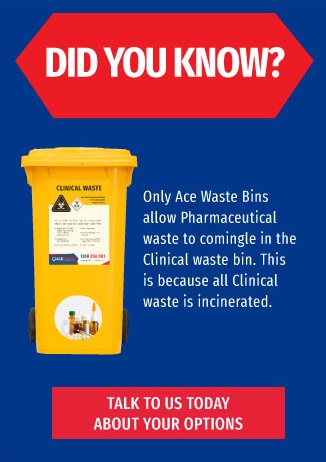
A clinical waste bin is a purpose-built, sealed container used to safely hold clinical waste, meaning the potentially infectious, hazardous, or sharp material produced during medical and healthcare activities. These bins are yellow, leak-proof, and rigid, and are marked with a biohazard symbol so that dangerous items such as blood-soaked dressings, contaminated equipment and sealed sharps containers can be stored, handled, and removed without putting staff, patients, or the public at risk. They matter because they are the first line of defence in stopping infection from spreading and in keeping a facility compliant with Australian waste regulations.
What Is Clinical Waste?
Before you can bin it correctly, it helps to know what counts as clinical waste. In simple terms, clinical waste is any waste that has the potential to cause infection, injury, or harm because of its origin in patient care, diagnosis, or treatment.
Common examples include:
- Sharps such as needles, scalpels, and broken glass vials
- Infectious materials like swabs, dressings, and gloves contaminated with blood or bodily fluids
- Human tissue and anatomical waste
- Laboratory waste including cultures and specimens
Two related streams are handled separately rather than in a standard clinical waste bin. Cytotoxic waste from chemotherapy and similar treatments must go into purple containers, and pharmaceutical waste has its own requirements. Both must be destroyed by high-temperature incineration.
Because these items behave very differently from general rubbish, they cannot go in an ordinary waste bin. Mixing them with everyday waste creates a serious safety hazard and breaches disposal rules.
What Makes a Clinical Waste Bin Different
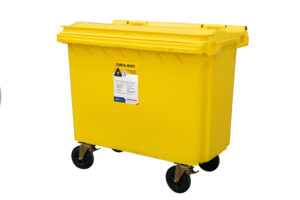
A clinical waste bin is engineered for containment, not just collection. Its design features exist for a reason:
- Colour coding – Yellow signals clinical or infectious waste, so anyone in the facility can identify it at a glance. Purple signals cytotoxic waste, which is a different stream entirely.
- Leak-proof construction – Sealed seams and secure lids stop fluids from escaping during storage and transport.
- Rigid, durable walls – Sturdy construction protects handlers during collection and transport.
- Clear labelling – The biohazard symbol and hazard markings warn staff and waste handlers of the risk inside.
- Secure lids – Many bins lock or seal once full, which prevents tampering and accidental spills.
Sharps are a special case. Needles and blades never go loose into a clinical waste bin. They go first into a dedicated puncture-resistant sharps container at the point of use, which is sealed when full. With Ace Waste, those sealed sharps containers can then be placed into your clinical waste bin, because high-temperature incineration destroys the container and its contents together.
The bin is only as safe as the system around it. The right container, in the right place, emptied on the right schedule, is what keeps a facility protected.
Why Clinical Waste Bins Are Important
The value of a proper clinical waste bin comes down to three things: safety, compliance, and reputation.
Safety – is the obvious one. A single needle-stick injury can expose a worker to bloodborne illness. Correct bins remove that everyday risk for nurses, cleaners, and waste collectors alike.
Compliance – is the second. Healthcare facilities in Australia must manage clinical waste in line with state environmental regulations and workplace health and safety obligations. Using the correct bins, segregating waste at the point of care, and arranging licensed collection are all part of meeting those requirements. Getting it wrong can lead to penalties and reputational damage.
Reputation and trust – follow from both. Patients, staff, and auditors expect a clinic or hospital to handle hazardous material responsibly. Visible, well-managed waste systems show that a facility takes its obligations seriously.
Choosing the Right Bin and Removal Partner
Not every facility needs the same setup. A busy hospital ward, a dental surgery, and a veterinary clinic each produce different volumes and types of waste, so bin size and quantity should match the workload. Sharps containers belong at the point of use, while larger sealed bins suit central holding areas. A waste audit is the quickest way to work out which bins you need and how many.
Just as important is what happens after the bin is full. Clinical waste cannot simply be thrown out. It must be collected by a licensed provider and treated or destroyed through approved methods. A reliable clinical waste removal service handles scheduled collection, provides compliant bins and liners, and gives you the documentation that proves the waste was disposed of correctly.
If you are reviewing how your site manages medical and infectious waste, the team at Ace Waste can help you match the right bins and collection schedule to your facility. Get in touch with us to organise a clinical waste solution that keeps your people safe and your facility compliant.
Frequently Asked Questions
1) What colour is a clinical waste bin in Australia?
Yellow, marked with the biohazard symbol, is the standard for clinical and infectious waste. Purple is used for cytotoxic waste, and the two streams must never be mixed, as cytotoxic material in a yellow bin contaminates the whole load.
2) What can go in a clinical waste bin?
Contaminated swabs, dressings, gloves, tubing, human tissue and laboratory waste, plus sealed sharps containers. General rubbish, recycling and cytotoxic waste do not belong in it.
3) Can sharps go straight into a clinical waste bin?
No. Loose needles and blades must go into a dedicated puncture-resistant sharps container at the point of use. Once that container is sealed, it can be placed into your Ace Waste clinical waste bin for collection and incineration.
4) What size clinical waste bin does my facility need?
It depends on your volume, layout and collection frequency. Small clinics often need only a compact bin per room, while hospitals and busy wards use larger wheeled units at central points. A waste audit matches bin size and quantity to what you actually generate.
5) Who can collect and dispose of clinical waste?
Only a licensed provider holding the correct environmental authority for your state. They must transport it to a licensed treatment facility and give you documentation showing how and where it was destroyed, which is your proof of compliance if you are audited.