Once medical waste is collected in Australia, it is transported in sealed, certified containers to a licensed treatment facility, where it is weighed, sorted by stream, treated (usually via high-temperature incineration or autoclaving), and the residue is safely disposed of or recovered as renewable energy. Every step is tracked and regulated to protect public health and the environment.
The journey of medical waste after collection
Medical waste follows a strict chain-of-custody pathway from the generator to the final treatment site.
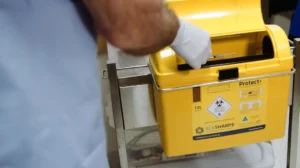
- Secure transport from site – After medical waste collection from hospitals, GP clinics, dental practices, vet clinics and aged care homes, sealed bins are loaded onto licensed vehicles. Drivers are trained in dangerous goods handling.
- Arrival at a licensed facility – Waste is weighed, scanned and logged. Providers like Ace Waste use real-time tracking (Ace Waste Live™), so every container is accounted for from pickup to destruction.
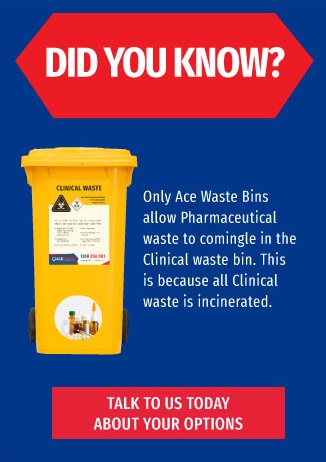
- Sorting by waste stream – Operators separate clinical waste, sharps, pharmaceutical waste, cytotoxic waste and biosecurity waste. Each stream is matched to the appropriate treatment method.
How clinical waste treatment in Australia works
Clinical waste treatment in Australia is governed by state EPA regulations and Australian Standards (AS/NZS 3816). Two primary methods are used:
- High-temperature incineration. The safest method for infectious, anatomical and pharmaceutical material. Waste is burnt at over 1,000°C, destroying pathogens, cytotoxic compounds and genetic material. This is mandatory for cytotoxic waste disposal and most healthcare waste streams.
- Autoclaving and steam sterilisation. Used for general clinical waste with no cytotoxic or pharmaceutical content. Pressurised steam sterilises the load before shredding and landfill burial.
Ace Waste operates high-temperature incineration facilities in Brisbane (Willawong, QLD) and Melbourne (Dandenong, VIC), and has diverted more than 264,488 tonnes from landfill since 1987.
What happens to the residue?
After treatment, the remaining ash and sterilised material is tested and placed in licensed landfill cells. At modern facilities, heat from incineration is captured and converted into renewable energy, making the plants self-sufficient. This closes the loop on clinical waste treatment in Australia and significantly reduces environmental impact compared with direct landfill disposal.
Why the process matters
Safe medical waste collection and disposal protects:
- Healthcare workers and the public from infection and sharps injury
- Waterways and soil from chemical and pharmaceutical contamination
- Patient privacy, as tissue samples and identifiable medical material are fully destroyed
Non-compliance can lead to heavy EPA fines and reputational damage, so most Australian healthcare providers partner with a certified specialist for end-to-end medical waste disposal.
Partner with Ace Waste
Since 1987, Ace Waste has supported hospitals, clinics, laboratories and aged care facilities across Brisbane, Melbourne and broader Australia with compliant, trackable medical waste collection and treatment. Our team manages every stream, from clinical to cytotoxic, with transparent reporting at every step.
Get in touch to arrange a quote or on-site waste assessment.