If your practice generates needles, scalpels, or any object that can pierce skin, sharps disposal Brisbane is not a side task. It is a legal obligation backed by Queensland law, and getting it wrong can mean fines, staff injuries, and reputational damage that no clinic wants on its record.
After nearly four decades working with Brisbane healthcare facilities, we have seen the same compliance gaps come up again and again. This guide breaks down what the rules actually say, what a compliant workflow looks like in practice, and how to choose a licensed provider that keeps you on the right side of regulators.
Why Sharps Disposal Is Regulated So Strictly in Queensland
Sharps are anything with a point or edge capable of puncturing the skin: hypodermic needles, scalpel blades, lancets, surgical wires, broken glass slides, dental burrs, and similar items. When these come into contact with blood or bodily fluids, they can transmit bloodborne pathogens such as Hepatitis B, Hepatitis C, and HIV.
Because of that risk, sharps disposal regulations QLD sit under the Waste Reduction and Recycling Act 2011 and the Environmental Protection Regulation. The legislation defines a sharp clearly, sets penalties for incorrect handling, and requires that all sharps generated at clinical premises be placed into containers that comply withAS23907:2023 . From our work supporting QLD Health through the COVID-19 vaccination rollout, regulators take this standard seriously, and breaches do not go unnoticed.
For practice managers, the takeaway is simple. Compliance is not optional, and DIY workarounds will not pass an audit.
What the Rules Require From Brisbane Practices
There are four obligations every Brisbane clinic, vet surgery, dental practice, tattoo studio, and aged care facility must meet.
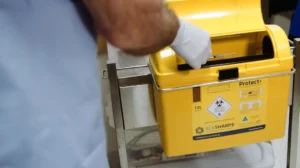
Use compliant containers – Sharps must go straight into rigid, puncture-resistant, leak-proof containers that meet Australian Standards. Yellow is the standard colour code for clinical and related sharps waste. Containers must be clearly labelled and never filled past the marked line.
Segregate at the point of use – Mixing sharps with general clinical waste, recycling, or domestic rubbish is not permitted. The container should sit where the procedure happens, not down the hallway. We routinely see needlestick risks rise when containers are placed even a few metres from the treatment chair.
Store waste securely – Filled containers need to be kept in an area that is inaccessible to the public, children, and animals until collection.
Engage a licensed transporter and treatment facility – Once full, sharps can only be moved and disposed of by a contractor holding the right environmental authority. This is where sharps collection Brisbane services come in, and where most compliance breaches actually happen.
How Licensed Sharps Collection Brisbane Services Work
A properly licensed provider will hold an environmental authority issued by the relevant Queensland regulator, operate vehicles approved to transport regulated waste, and dispose of the material at an authorised treatment facility. For sharps and clinical waste, high-temperature incineration is the gold standard because it guarantees the destruction of pathogens, which lower-temperature methods cannot always deliver consistently.
A good provider will also help you classify your waste correctly. The four categories you need to know are medical sharps, non-contaminated sharps, biohazardous contaminated sharps, and chemically contaminated sharps. Each has different handling requirements, and from what we see across hundreds of Brisbane sites, misclassification is one of the most common reasons practices get pinged in audits.
For a closer look at compliant sharps streams, container options, and treatment processes, Ace Waste offers a dedicated sharps disposal service backed by EPA-approved incineration and trackable collections through the Ace Waste Live system.
Choosing the Right Provider: A Practical Checklist
Not every contractor offering sharps disposal Brisbane services is equally equipped. Before you sign anything, work through this list.
- Licences and authorities: Ask to see their environmental authority for transporting and treating clinical and related waste.
- Container range: Look for AS23907:2023compliant options in sizes that match your usage, from small 6L bench-top units to wall-mounted bins and 30L floor containers.
- Treatment method: Confirm where your waste actually ends up. Incineration at a licensed facility is the safest answer.
- Tracking and documentation: Real-time waste tracking and proper consignment paperwork protect you in an audit.
- Service flexibility: No lock-in contracts, scheduled and on-demand collections, and clear pricing make life easier.
- Industry experience: A provider that already works with hospitals, dental clinics, GPs, vets, and tattoo studios will understand your specific workflow.
Common Mistakes That Trigger Compliance Issues
Three patterns come up repeatedly in the audits we have walked clients through. Using ad-hoc containers like detergent bottles in a commercial setting (this is only permitted for domestic sharps, not clinical premises). Overfilling containers past the fill line, often because staff want to delay the next collection. And engaging an unlicensed contractor because they quoted slightly less, only to discover the waste was not treated correctly when the paper trail was requested.
Each of these is avoidable with a documented procedure, staff training, and a provider who treats compliance as the baseline rather than an upsell.
Get Compliant Sharps Disposal Sorted
Sharps disposal regulations QLD are strict for good reason, and the cost of getting it wrong far outweighs the cost of doing it properly. A licensed partner, the right containers, and a clear internal process are all it takes to stay compliant and keep your team safe.
Need a waste audit or a quote for sharps collection Brisbane services? Talk to the Ace Waste team and we will tailor a plan to your facility.
Frequently Asked Question –
Q1: What are the legal requirements for sharps disposal in Brisbane?
Sharps disposal in Brisbane falls under the Waste Reduction and Recycling Act 2011 and the Environmental Protection Regulation. Clinical premises must use AS23907:2023 compliant containers, segregate sharps at the point of use, store them securely, and engage a licensed transporter for collection and treatment.
Q2: What size sharps containers does my Brisbane practice need?
Container size depends on your sharps volume. Smaller 6L bench-top units suit GP rooms, dental chairs, and tattoo studios, while 30L floor containers work better for hospitals, aged care facilities, and busy vaccination clinics. A licensed provider can recommend the right mix for your workflow.
Q3: How often should sharps containers be collected from a clinic in Brisbane?
Collection frequency depends on how quickly your containers reach the fill line. Busy GP and dental practices often need weekly or fortnightly sharps collection Brisbane services, while smaller clinics may only require monthly pickups. Containers should never be filled past the marked line.
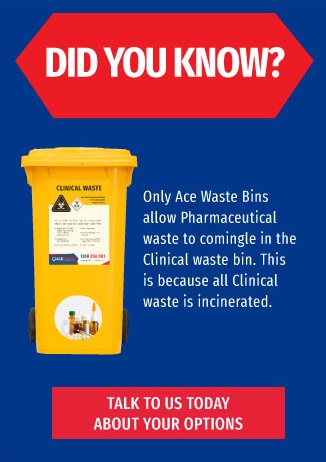
Q4: Can I dispose of clinical sharps in a regular yellow clinical waste bin?
No. Sharps and soft clinical waste are separate streams under sharps disposal regulations QLD, even though both use yellow coding. Sharps must go into rigid AS23907:2023 containers, while soft clinical waste belongs in lined yellow bags or bins.