S4 (Schedule 4) drugs are prescription-only medicines with moderate controls, while S8 (Schedule 8) drugs are controlled drugs of addiction subject to far stricter handling, storage and disposal rules. The key disposal difference is simple: S4 medicines can be destroyed through a licensed clinical waste contractor with standard records, while S8 destruction must be witnessed by an authorised person and documented in a drug register.
Australian healthcare facilities, pharmacies, aged care providers and veterinary clinics handle two very different categories of regulated medicines. Getting the disposal wrong carries real compliance risk. Here is how S4 and S8 drugs differ, and what each one demands at the disposal stage.
What are S4 drugs?
Schedule 4 drugs are Prescription Only Medicines under the Poisons Standard (SUSMP). They can only be supplied on a valid prescription from an authorised health practitioner. The classification recognises a potential for misuse, but these medicines are not classed as drugs of addiction.
Common S4 examples include antibiotics, antidepressants, blood pressure medications and most everyday prescription drugs. A subset known as S4D (Schedule 4 Appendix D) carries tighter controls closer to S8, covering certain benzodiazepines and other substances with a higher abuse potential.
What are S8 drugs?
Schedule 8 drugs are Controlled Drugs, often called drugs of addiction or drugs of dependence. They have a recognised therapeutic use but a high risk of abuse, dependence and diversion, so they sit under the strictest legislative controls in the country.
Common S8 examples include morphine, oxycodone, fentanyl, methadone, ketamine and methylphenidate. Because of their illicit value, S8 medicines require secure storage, two-person handling, balance checks in a drug register and tightly controlled destruction.
S4 vs S8: side-by-side comparison
| Feature | S4 (Prescription Only) | S8 (Controlled Drug) |
| Classification | Prescription Only Medicine | Drug of addiction / dependence |
| Examples | Antibiotics, antidepressants, BP medications | Morphine, oxycodone, fentanyl, methadone |
| Abuse / diversion risk | Moderate | High |
| Storage | Secure, staff-accessible | Locked safe or vault, restricted access |
| Drug register | Not generally required (S4D excepted) | Mandatory, with balance reconciliation |
| Destruction witness | Generally not required | Required, by an authorised person |
| Disposal route | Licensed clinical waste contractor | Witnessed destruction, recorded, then licensed waste contractor |
How to dispose of S4 drugs in Australia
For consumers, the simplest route is the Return Unwanted Medicines (RUM) scheme. Almost every community pharmacy keeps a RUM bin and will accept unused or expired medicines at no cost.
For healthcare facilities and commercial operators, S4 medicines should go to a licensed hazardous or clinical waste contractor. The disposal must not put staff or the public at risk, and the transaction should be recorded. Most states classify expired, recalled or surplus pharmaceuticals as clinical, regulated or hazardous waste, which rules out general bins and sewer disposal.
How to dispose of S8 drugs in Australia
S8 destruction is where the rules tighten sharply. Across the states, the destruction of a Schedule 8 medicine must be witnessed by an authorised person. Depending on the jurisdiction, that witness may be a pharmacist, registered health practitioner, authorised departmental officer, police officer or veterinary surgeon.
The destruction has to be recorded in the S8 (and S4D) drug register immediately afterwards. A complete record includes the medicine name, form, strength, quantity destroyed, date and time, method and place of destruction, and the full names and signatures of the person destroying the drug and the witness. In some states, such as New South Wales, the Pharmaceutical Services Branch coordinates collection and records the authorised destruction directly.
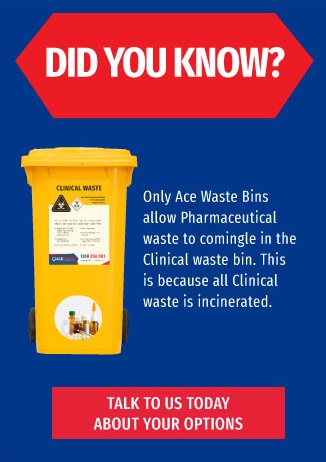
After the witnessed and documented destruction step, the residual waste is consigned to a licensed clinical waste provider for final treatment, typically high temperature incineration that renders the substance non-recoverable.
Why state regulations matter
Drug scheduling is national under the Poisons Standard, but disposal rules sit with each state and territory. Queensland applies the Environmental Protection Regulation 2019, Victoria works to the EPA’s Clinical and Related Waste guidance (IWRG612), South Australia follows its Code of Practice for drugs of dependence, and New South Wales operates under the Poisons and Therapeutic Goods Regulation. Always confirm the current requirements for the state your facility operates in.
Frequently asked questions
1) Can S8 drugs be flushed or binned?
No. S8 medicines must be destroyed under witness, recorded in the register, then handled as clinical waste. Sewer and general waste disposal are not permitted.
2) Is a drug register needed for S4 disposal?
Generally no for standard S4 medicines, though S4D substances carry register and witness requirements similar to S8.
3) Who can witness S8 destruction?
An authorised person as defined by your state, commonly a pharmacist, registered health practitioner, authorised officer, police officer or veterinary surgeon.
Compliant pharmaceutical waste disposal with Ace Waste
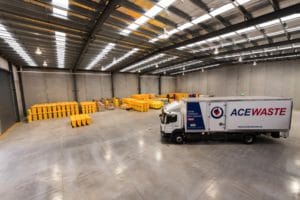
Ace Waste provides authorised clinical and pharmaceutical waste destruction for healthcare facilities, pharmacies, aged care and veterinary clinics across Australia. Using high temperature incineration, including the largest facility of its kind in the country, Ace Waste destroys S4 and S8 waste to the highest standard while keeping it out of landfill.
To set up compliant, fully documented drug disposal for your facility, contact the Ace Waste team today.