If your business produces oils, solvents, paints, acids or laboratory chemicals, you are almost certainly generating regulated waste. And in Queensland, how you store, transport and dispose of that waste is not a matter of preference. It is a legal obligation with real consequences for getting it wrong.
Yet plenty of business owners are unsure what actually counts as regulated waste, or where their responsibilities begin and end. This guide breaks it down in plain terms so you can stay compliant, protect your team and avoid unwelcome surprises.
Regulated waste, defined
In Queensland, “waste” is split into two broad groups. General waste covers the low-hazard material most businesses deal with day to day, similar to household rubbish. Regulated waste is everything that needs a higher level of management because it can harm the environment or human health.
The formal definition sits in the Environmental Protection Regulation 2019, under the Environmental Protection Act 1994. In short, regulated waste is commercial or industrial waste of a type, or containing a constituent of a type, listed in Schedule 9 of the Regulation. That schedule is the reference point for what is in and what is out.
It is worth noting the terminology shifts by state. What Queensland calls regulated waste, Victoria calls prescribed waste. If you operate across borders, the rules travel with the location, not the label.
Common types of regulated waste
Regulated waste turns up across far more industries than people expect. If your operation involves any of the following, it is on the list:
- Waste oils, sludges and oily water
- Solvents, acids, alkalis and other chemical waste
- Flammable wastes such as paints, lacquers, varnishes, resins, pigments and solvents
- Coolants, glycols and surfactants
- Glues, adhesives and pharmaceuticals
- Pesticides, herbicides and other toxins
- Laboratory chemicals and clinical by-products
Manufacturers, mechanic workshops, laboratories, hospitals, airports and paint producers all generate regulated waste as a routine part of doing business. So do many smaller operators who assume the rules only apply to heavy industry.
Hazardous waste vs regulated waste
The two terms get used interchangeably, and for good reason. Hazardous waste is the everyday description for any substance containing harmful elements that pose a risk to people or the environment. Regulated waste is simply the Queensland regulatory classification that captures much of it.
One important distinction: regulated waste does not include infectious pathogens. Material carrying an infection risk falls under clinical waste, which is managed differently again. Hazardous chemical waste can be solid, liquid or gas, and it can come from a known source or an unidentified one, which is exactly why careful classification matters.
How regulated waste is classified
Queensland uses a risk-based framework, so not every regulated waste is treated the same way. As a waste generator, you are responsible for classifying your waste into the correct category. There are two ways to do that.
The first is to adopt a default category straight from Schedule 9 of the Regulation. The second is to arrange sampling and testing by a suitably qualified person, which can demonstrate a more accurate, and sometimes lower, risk category. Where testing is used, the result is treated as “tested waste” and stays valid for a maximum of three months, after which it must be reassessed.
Getting the category right is not busywork. It determines how the waste must be stored, who can transport it and where it can legally end up.
Your compliance obligations
Once waste is classified, a chain of responsibility kicks in across everyone who handles it: the generator, the transporter and the receiver.
Waste tracking is central to this. Handlers must submit waste tracking information when transporting regulated waste, which creates a clear record from origin to disposal. This system exists to prevent illegal dumping and the environmental harm that follows. Transporters generally need an environmental authority to move regulated waste in Queensland, and disposal must happen at an appropriately licensed facility.
The penalties for cutting corners are significant, and the reputational damage of a compliance breach can outlast any fine. For most businesses, the practical answer is to partner with a licensed specialist rather than try to navigate the framework alone.
How Ace Waste helps Queensland businesses stay compliant
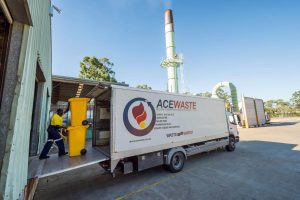
This is where experience counts. Ace Waste has been managing specialised waste since 1987 and operates one of Australia’s largest high-temperature incineration facilities in Willawong, Queensland.
Our hazardous waste disposal service covers a broad spectrum of regulated waste, from liquid waste and contaminated oils to flammable materials, paints, acids, coolants and laboratory chemicals. We handle the whole process, from collection through to environmentally responsible disposal, all in line with Queensland government regulations.
Just as importantly, we help you get the fundamentals right. Our team can advise on the correct waste containers for your industry, prepare tailored waste management guidelines and, through a waste management audit, pinpoint exactly where your obligations sit. Rather than the complexity of regulated waste management landing on your desk, it becomes something handled properly on your behalf.
Our EPA-approved incineration process also ensures complete destruction of toxic materials while recovering energy, so compliance and environmental responsibility go hand in hand.
Get your regulated waste sorted
Regulated waste management in Queensland does not have to be a headache. With the right classification, proper tracking and a licensed disposal partner, you can meet your obligations with confidence and get back to running your business.
Not sure whether your waste is regulated, or how to dispose of it correctly? Get a quote from Ace Waste today and let our experienced team take care of it.
Frequently Asked Questions
1) What is the difference between regulated waste and general waste in Queensland?
General waste is low-hazard material similar to household rubbish that is not listed in Schedule 9 of the Environmental Protection Regulation 2019. Regulated waste is commercial or industrial waste that needs a higher level of management because it can harm human health or the environment. If your waste appears in Schedule 9, it is regulated and must be handled accordingly.
2) Is hazardous waste the same as regulated waste?
Largely, yes. Hazardous waste is the everyday term for any substance containing harmful elements, while regulated waste is Queensland’s official classification that captures much of it. One key difference is that regulated waste does not include infectious material. Anything carrying an infection risk falls under clinical waste, which is managed separately.
3) Who is responsible for classifying regulated waste?
The waste generator is responsible for classifying their waste into the correct risk-based category. You can either adopt a default category from Schedule 9 of the Regulation, or arrange sampling and testing by a suitably qualified person to demonstrate a more accurate category. Tested waste results stay valid for a maximum of three months.
4) Do I need a licence to transport regulated waste in Queensland?
Transporters generally need an environmental authority to move regulated waste in Queensland, and waste tracking information must be submitted during transport. This is why most businesses partner with a licensed disposal specialist rather than moving regulated waste themselves, as it keeps the full chain of responsibility compliant.
5) What types of businesses produce regulated waste?
Far more than most people expect. Manufacturers, mechanic workshops, laboratories, hospitals, airports, paint producers and many smaller operators all generate regulated waste through oils, solvents, chemicals, paints, coolants and similar materials. If your operation produces any of these, you likely have regulated waste obligations.