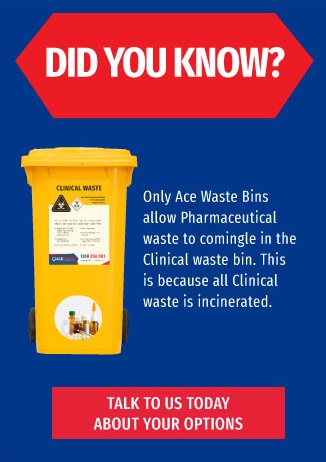
Every Queensland clinic, hospital and aged care home produces liquid waste that cannot simply go down the drain. Pharmaceutical fluids, laboratory chemicals, blood and body fluids and imaging solutions all carry risks to staff, patients and the environment when they are handled the wrong way.
For the practice managers and facility teams who sign off on this, getting liquid waste management right is both a safety obligation and a compliance one. Here is what healthcare operators across Queensland need to know.
What counts as liquid waste in a healthcare setting
Liquid waste covers far more than the odd spill. In a medical environment it usually falls into a few recurring streams:
- Pharmaceutical liquids: unused vaccines, injectables, syrups and cytotoxic solutions
- Laboratory and chemical waste: reagents, fixatives such as formalin, solvents and developer fluids
- Clinical fluids: blood, body fluids, dialysis fluid and suction canister contents
- Trade and industrial liquids: oils, coolants and cleaning chemicals from on-site plant and equipment
Each of these behaves differently, which is why they should never be tipped together or poured into general drainage.
What Queensland regulation expects of you
In Queensland, regulated waste is governed under the Environmental Protection Act 1994 and the Environmental Protection Regulation 2019, and your responsibility does not stop the moment a drum is loaded onto a truck. Under the general environmental duty, and the waste tracking obligations that apply to waste generators, you are expected to make sure each load is handled correctly from the point it is generated.
In practice, every load of liquid waste should be:
- collected by a transporter holding the correct environmental authority
- tracked with documentation recording the waste type, quantity and destination
- treated or disposed of at a licensed facility, not diverted or dumped
Working with a provider that manages this paperwork end to end protects your business if you are ever asked to prove compliance.

Why healthcare liquid waste needs specialist handling
Liquid waste is trickier than the sharps and clinical waste bags most healthcare teams handle every day. It can react, leak, give off fumes or contaminate other streams when it is stored or transported incorrectly, so a general skip or commercial bin service is rarely suitable.
Specialist liquid waste removal services use sealed, compatible containers, trained drivers and treatment methods matched to each waste type. For higher-risk streams, high-temperature incineration destroys pharmaceutical waste and chemical residues rather than passing the problem downstream. The same infrastructure that handles hazardous and chemical waste disposal for laboratories and larger sites gives smaller clinics access to the same standard of treatment.
Choosing a liquid waste partner in Queensland
When you compare providers, look past the headline price and check the operational detail. A dependable partner should offer:
- Local Queensland collection with scheduling that suits your opening hours
- Full compliance documentation, including waste tracking and disposal certificates
- Correct containers and advice for each liquid stream you generate
- Licensed treatment facilities they own or control, rather than third-party subcontractors
A provider that treats waste at its own facility can give you a clear, unbroken chain of custody from your bin to final disposal.
For many Queensland healthcare businesses, consolidating clinical, sharps and liquid streams under one contract also cuts admin and reduces the number of suppliers on site. A waste audit is the quickest way to see which streams you are generating and whether your current setup is right-sized.
Talk to a Queensland liquid waste specialist
Ace Waste has managed regulated waste for Queensland healthcare businesses since 1987, with treatment carried out at our own facility. If you want compliant, reliable liquid waste collection for your practice, hospital or clinic, contact our team for advice tailored to your site.
Frequently Asked Question –
1) Can liquid waste be poured down the drain in a healthcare setting?
No. Pharmaceutical, clinical and chemical liquids are regulated waste and cannot go into general drainage. Some trade liquids may go to sewer only under a trade waste agreement. Everything else must be collected as regulated waste and treated at a licensed facility.
2) What makes liquid waste “regulated” in Queensland?
Regulated waste is defined under the Environmental Protection Regulation 2019. As the generator, you must classify it into a risk-based category using Schedule 9 of the Regulation. That classification then sets how it must be transported, treated and disposed of.
3) Who is responsible for liquid waste once it leaves my site?
Generators, transporters and receivers each have their own duties. As the generator, you must classify the waste, use a transporter with the correct environmental authority, and keep records. Meeting the general environmental duty and waste tracking rules is what protects you if you are audited.
4) How is healthcare liquid waste treated?
It depends on the stream. Higher-risk pharmaceutical and chemical liquids are destroyed by high-temperature incineration rather than sent to landfill. Sealed containers and licensed transport keep the chain of custody intact at every step.
5) How often should a healthcare facility schedule liquid waste collection?
It should match the volume and type of waste you actually generate, not a fixed default. A small clinic has very different needs to a hospital or laboratory. A waste audit is the best way to right-size your containers and schedule, so you avoid both wasted pickups and overflow.