A medical clinic should replace a sharps container as soon as it reaches the three-quarter (75%) fill line, never waiting for it to become completely full. In practice, most clinics pair this rule with a scheduled sharps disposal service that collects containers weekly, fortnightly or monthly, depending on how many sharps the practice generates. Emptying at the 75% mark protects staff from needlestick injuries and keeps the clinic compliant with Australian clinical waste requirements.
It is worth clearing up one point of language early. Single-use sharps containers are not manually emptied on site. Once sealed, they are collected whole by a licensed contractor and destroyed. Reusable containers are the ones physically emptied, sanitised and returned. So for most clinics, “emptying” really means sealing a full container and swapping in a fresh one.
Why the three-quarter fill rule matters
The 75% fill line exists for safety, not convenience. When a container is packed to the brim, staff instinctively press sharps down or reach past the opening to make room, and that is exactly when needlestick injuries happen. Leaving headroom means the lid closes cleanly, nothing protrudes, and the container can be sealed without anyone putting their hands near used needles.
Overfilling also compromises the container itself. Sharps bins are designed to seal and lock at a set capacity. Push past that point and the closure mechanism may not engage properly, which risks spills during transport and storage.
How often should a sharps container be collected?
Collection frequency depends on volume, not a fixed calendar rule. As a general guide:
- High-volume clinics (day surgeries, vaccination hubs, busy GP practices): weekly collection
- Medium-volume clinics (standard GP practices, dental clinics, physiotherapy with injectables): fortnightly collection
- Low-volume sites (allied health, small clinics, aged care rooms): monthly collection
The container’s fill level always overrides the schedule. If a bin hits 75% before its next scheduled pickup, it should be sealed and replaced straight away rather than left in service.
What determines your collection frequency?
Several factors shape how often a clinic needs a pickup:
- Patient throughput and the number of injections, blood draws or procedures per day
- Container size, since a large floor-standing unit lasts far longer than a 1.4 litre bench container
- Number of collection points across the practice
- Storage limits, because full containers should not be stockpiled while waiting for a pickup
- State regulations, which set the outer limits on how long clinical waste can be held on site
A good provider will run a waste audit to review your actual fill rates and adjust the schedule, so you are neither overpaying for empty pickups nor storing full containers too long.
Australian standards and compliance
Sharps containers used in Australia are built to a recognised national standard. The current standard is AS/NZS 23907:2023, which took effect on 1 July 2023 and replaced the older AS 4031 (single-use containers) and AS/NZS 4261 (reusable containers). It covers both single-use and reusable containers and sets requirements for puncture resistance, leak resistance and a clear fill-indicator line.
Used sharps are classified as clinical or related waste, which must be transported and treated by a licensed contractor rather than placed in general rubbish. Clinical waste handling is regulated at state and territory level, so exact storage-time limits and documentation requirements are set by each state or territory’s environment regulator and vary by location. Clinics should confirm the rules that apply in their state and keep waste transport records as proof of compliant disposal.
Signs it is time to replace your sharps container
Seal and swap a container when any of these apply:
- The contents reach the 75% fill line marked on the bin
- The container has been in use for its maximum recommended period, even if not full
- The lid or closure is damaged in any way
- Sharps are visible near the opening or difficult to insert cleanly
When in doubt, replace early. A part-full container costs little to swap, while an overfilled one creates a genuine injury and compliance risk.
How a sharps disposal service works
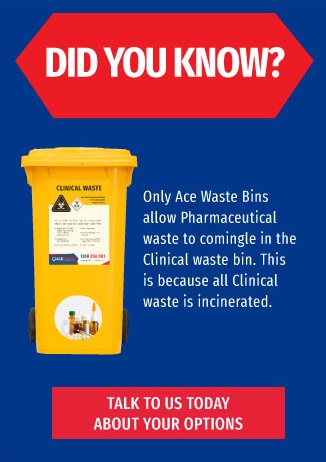
A managed sharps disposal service handles the full cycle so clinic staff never touch full containers beyond sealing them. The service supplies compliant containers in the sizes you need, sets a collection schedule matched to your fill rate, collects sealed containers on route, provides fresh replacements on the spot, and issues waste transport documentation for your records. The sealed waste is then treated and destroyed at a licensed facility.
For a clinic, this removes the guesswork. You get the right number of containers, a pickup rhythm that fits your volume, and paperwork that stands up to an audit.
Frequently asked questions
1) Can you empty a sharps container yourself?
No. Single-use sharps containers must never be opened, decanted or emptied by hand. They are sealed when full and collected whole by a licensed sharps disposal service. Only purpose-built reusable containers are emptied, and that is done off site under controlled conditions.
2) What happens if a sharps container is overfilled?
An overfilled container may not seal correctly, which risks spills and exposed sharps during handling and transport. It also forces staff to push contents down, raising the chance of a needlestick injury. Always replace at the 75% fill line.
3) How long can a clinic store a full sharps container?
Full containers should be collected as soon as practical rather than stored. Maximum on-site storage times for clinical waste are set by each state and territory environment regulator, so clinics should check the limit that applies to their location.
4) What size sharps container does a clinic need?
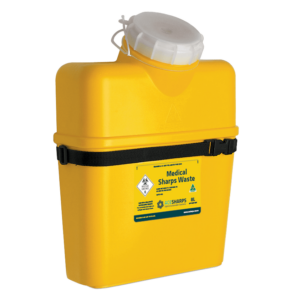
It depends on volume and placement. Bench-top containers of 1.4 to 7 litres suit individual treatment rooms, while larger floor-standing units suit high-volume or central collection points. A sharps disposal service can size containers to your fill rate so replacements stay convenient and compliant.
5) Do sharps containers have to be a particular colour?
Yes. Under the current standard, sharps containers are colour coded by their contents: yellow for biohazardous (clinical) sharps and purple for cytotoxic sharps. Containers holding pharmaceutical waste or other sharps that must be incinerated use a yellow container with an orange lid.
Need a compliant, right-sized sharps disposal service for your clinic? Ace Waste provides Australian-standard sharps containers, scheduled collections matched to your fill rate, and full waste transport documentation.