Clinical waste in Victoria is pre-classified as reportable priority waste, so every movement must be recorded in EPA Victoria’s Waste Tracker. Waste Tracker is the electronic system that tracks reportable priority waste. Producers, transporters and receiving facilities each record their part of the transaction.
What is EPA Victoria’s Waste Tracker?
Waste Tracker is EPA Victoria’s electronic system for tracking reportable priority waste. It records each transaction as waste moves from the site that produced it, to the transporter, to the facility that receives it. Producers, accredited consigners, transporters and receivers all use it.
Is clinical waste reportable priority waste in Victoria?
Yes. EPA Victoria states that clinical and related industrial waste is pre-classified as reportable priority waste. That classification is what brings it into Waste Tracker, so a Melbourne clinic cannot treat it as ordinary commercial waste, whatever the volume.
Clinical and related waste in Victoria includes:
- Sharps: syringes, needles, lancets and scalpel blades contaminated with blood, body fluids or cultures
- Blood and body fluids: whole blood, serum, plasma and other fluids
- Human tissue: pathology and biopsy samples, organs and placentae
- Laboratory cultures: cultures or suspensions of microorganisms, tissue cultures, agars and broths
- Contaminated materials: bandages and dressings soiled with blood or body fluids
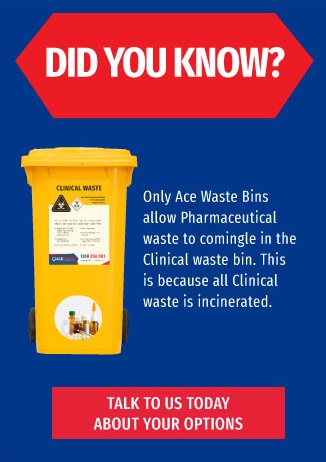
- Pharmaceutical waste: unused and expired medicines, plus items contaminated by them (codes R120 and R140)
What does a Victorian clinic have to do before clinical waste leaves the site?
A Victorian clinic must segregate clinical waste into compliant containers, hold it safely on site, use a transporter with the right permission, and make sure the receiving facility is permitted for that waste type. The transaction must then be recorded in the Waste Tracker.
Your duties under the Environment Protection Act 2017 cover:
- Depositing industrial waste correctly
- Managing priority waste on site
- Notifying EPA of a transaction in reportable priority waste
- Sending waste only to facilities permitted for those waste types
Practical setup: colour-coded clinical waste bins at the point of use, a secure storage area, and a scheduled waste collection so bins are never overfilled.
Who records the waste in the Waste Tracker?
Each party records its own step. The producer starts the record when waste leaves the site, the transporter records the movement, and the receiving facility records what arrived. Gaps between those records are what EPA notices first.
How do I check if my clinical waste provider is permitted?
Ask for the provider’s EPA Victoria permission number and confirm it covers your waste type. Then ask where the waste is treated, and ask to see the Waste Tracker records for each collection before you sign a contract.
ACE Waste holds EPA Victoria licence 11546 and is certified to ISO 9001, 14001 and 45001 (our compliance). Clinical waste collected in Melbourne is destroyed at our own high-temperature incinerator in Dandenong South, and every collection is logged in Ace Waste Live.
Frequently Asked Questions
1) Does a small GP clinic or dental practice need waste tracking?
Yes. The rules follow the waste type, not the size of the business. Clinical waste is reportable priority waste whatever the volume.
2) What if my transporter does not record the movement?
You still hold your own duties as the producer. Ask your provider to show you the records for each collection.
3) Can clinical waste go to any waste facility in Victoria?
No. It can only go to a facility with a permission for that waste type.
Tracked clinical waste disposal in Melbourne
ACE Waste has provided clinical waste disposal and waste disposal in Melbourne since 1987, with our Victorian facility at Dandenong South.
Get In Touch or call 1300 850 901.